
How Arrest Warrants Work in Smith County
In Smith County, a judge or magistrate signs an arrest warrant only after reviewing a sworn complaint or affidavit showing probable cause. That order gives a peace officer authority to take a named person into custody. Where the case lands depends on the charge. District Courts handle felonies, County Courts at Law take assigned misdemeanors, and justice of the peace and municipal courts handle fine-only and city matters. A warrant is also not the same thing as a charging record, an indictment, a summons, or a search warrant, so a docket entry alone may not tell you whether an order is out there. Ask the court directly which document exists in the file. A charge entry never proves warrant status on its own, and unserved or restricted orders often stay off the public docket entirely.
Smith County Chapter 15 Arrest Warrant Framework
Texas Code of Criminal Procedure Chapter 15 governs arrest warrants: the sworn complaint, the probable-cause finding, and what the order itself must direct. Chapter 18 is a different animal, covering search warrants for described property, and it never substitutes for an arrest order. In Smith County, the issuing magistrate and the case court decide which parts of the record you may inspect and when. Read Chapter 15 for the arrest process itself. The statute sets procedure; it is not a lookup for any individual case status.
Arrest Warrants: What They Contain
Texas law spells out what a warrant must contain, but Smith County publishes no sample warrant or local warrant-number format. Match a document to a case through the cause number and the issuing court. A charge name alone rarely identifies one person, and it says nothing about bond terms. Ask the District Clerk or whichever clerk holds the file about the public case record, then ask the court about current warrant status.
| Cause / warrant number | Ask the custodian; no Smith County public number pattern was documented. |
|---|---|
| Named subject | Verify identity through the issuing court, not a name-only match. |
| Charge / offense | Read the warrant order and charge record as related but distinct documents. |
| Issuing magistrate / court | Identifies the authority and court that controls follow-up. |
| Bond / bail | Confirm current terms with counsel and the court; no countywide schedule was found. |
| Issue / service | Ask whether service, return, or later court action is on file. |
Smith County Felony Arrest Warrant Files Route Through the District Clerk
Felony cases in Smith County run through the District Clerk, who keeps District Court records and prepares criminal warrants, writs, and commitments. The office sits at 100 N. Broadway, Room 204, in Tyler. Counter hours run 8 a.m. to 5 p.m. on weekdays, with a 4:30 p.m. payment cutoff. Court-specific calendar questions go to the District Court coordinators instead. Remember the division of labor here. The clerk can locate a record and pull the file, but only the court can rule on a motion or change a warrant's status. The clerk's official information page District Clerk records and contact details covers the records counter itself, not any person's warrant or case.
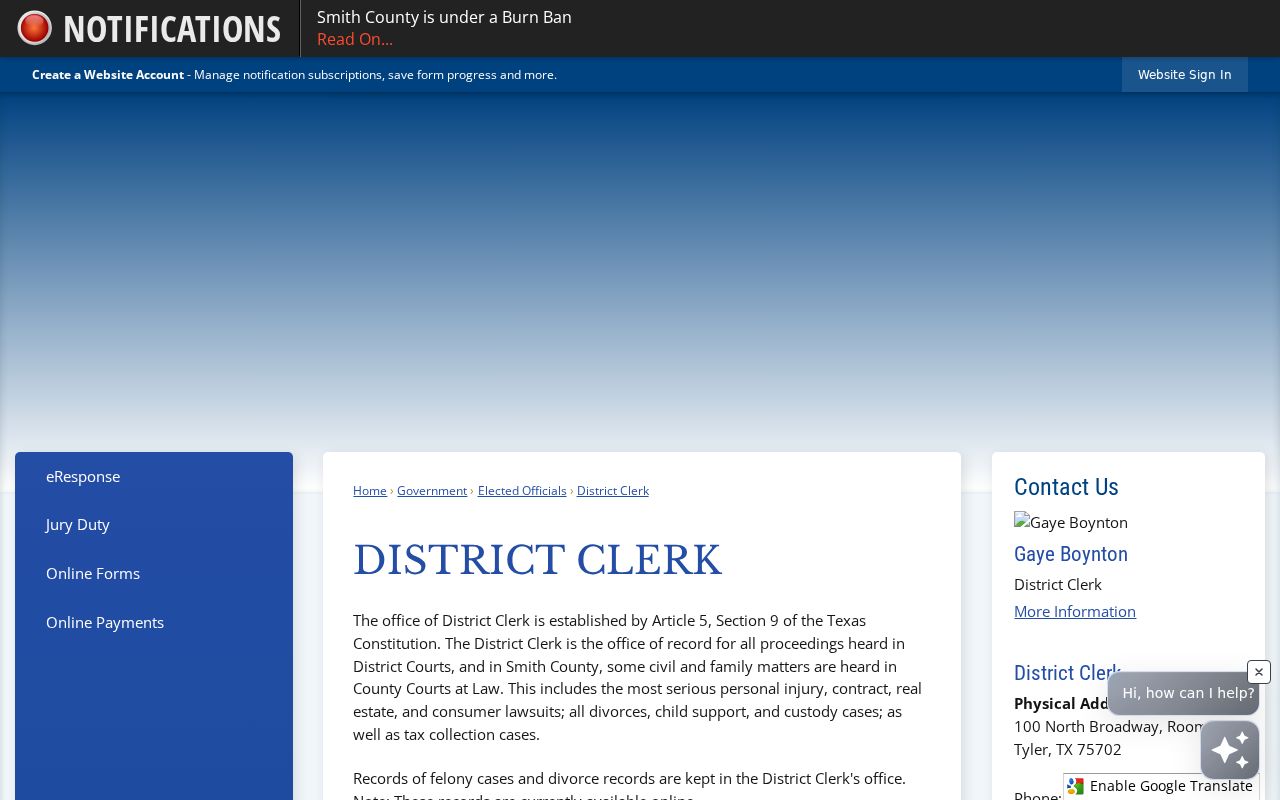
For a County Court at Law misdemeanor in Smith County, the County Clerk's criminal department holds the file, not the District Clerk.
How Warrants Get Served in Smith County
Depending on the issuing court's direction, the Smith County sheriff, constables, city police, and city marshals can all serve process. The sheriff's On Sight Guidelines describe an internal Warrants Division workflow, but the agency posts no public warrant line, service roster, counter hours, or surrender instructions. Its general phone number cannot substitute for the court's status record. After an arrest, booking and magistration follow under the applicable process. Smith County publishes no bond-window location, accepted payment methods, or walk-in surrender schedule either. Confirm logistics with the issuing court or your attorney before you travel anywhere.
Smith County Arrest Warrant Service Status Is Not Case Status
A served warrant does not close anything by itself. A Smith County case can stay open after service, and the served order may remain visible until a return or court action posts. The court's record, a sheriff or constable service return, a jail entry, and any restricted law-enforcement index are related but separate records, so always ask which one a person is describing. Confirm whether a return or bond event has posted. A booking search tells you someone was arrested; it cannot confirm the underlying case is resolved. On city matters, keep one more wrinkle in mind: the municipal court may keep and clear its own warrant record even when another agency made the arrest.
Arrest Warrants, Summonses, and Bench Warrants
Three orders get confused constantly. A summons directs a person to respond to a charge without immediate custody. An arrest warrant authorizes taking a person into custody on probable cause. A bench warrant follows a missed court obligation, such as a skipped setting. The issuing court in Smith County can explain which order exists and what response it requires. Some material stays hidden, too. A public case entry may not expose a sealed affidavit or investigative file.
| Feature | Arrest Warrant | Summons | Bench Warrant |
|---|---|---|---|
| What It Orders | Custody on a criminal matter | Appear or answer as directed | Response to an existing court obligation |
| Basis | Probable cause | Filed charge and notice process | Missed setting or other court requirement |
| Who Issues It | Judge or magistrate | Authorized court process | Judge in the pending case |
| How to Respond | Attorney-guided court contact and bond/surrender plan | Follow the listed appearance instructions | Ask the court about recall, motion, or setting |
Federal Arrest Warrant Questions Leave Smith County Court
A federal criminal case in the Tyler Division of the Eastern District of Texas is not a Smith County case at all. The federal courthouse at 211 W. Ferguson Avenue handles those proceedings, and the U.S. Marshals Service serves federal warrants. PACER provides federal docket access, and its published fee rules apply. A Smith County portal or sheriff contact cannot establish the full status of a federal warrant, so county silence never equals federal clearance. Check the federal docket and the right federal office instead. The PACER fee FAQ explains those charges on the official page.
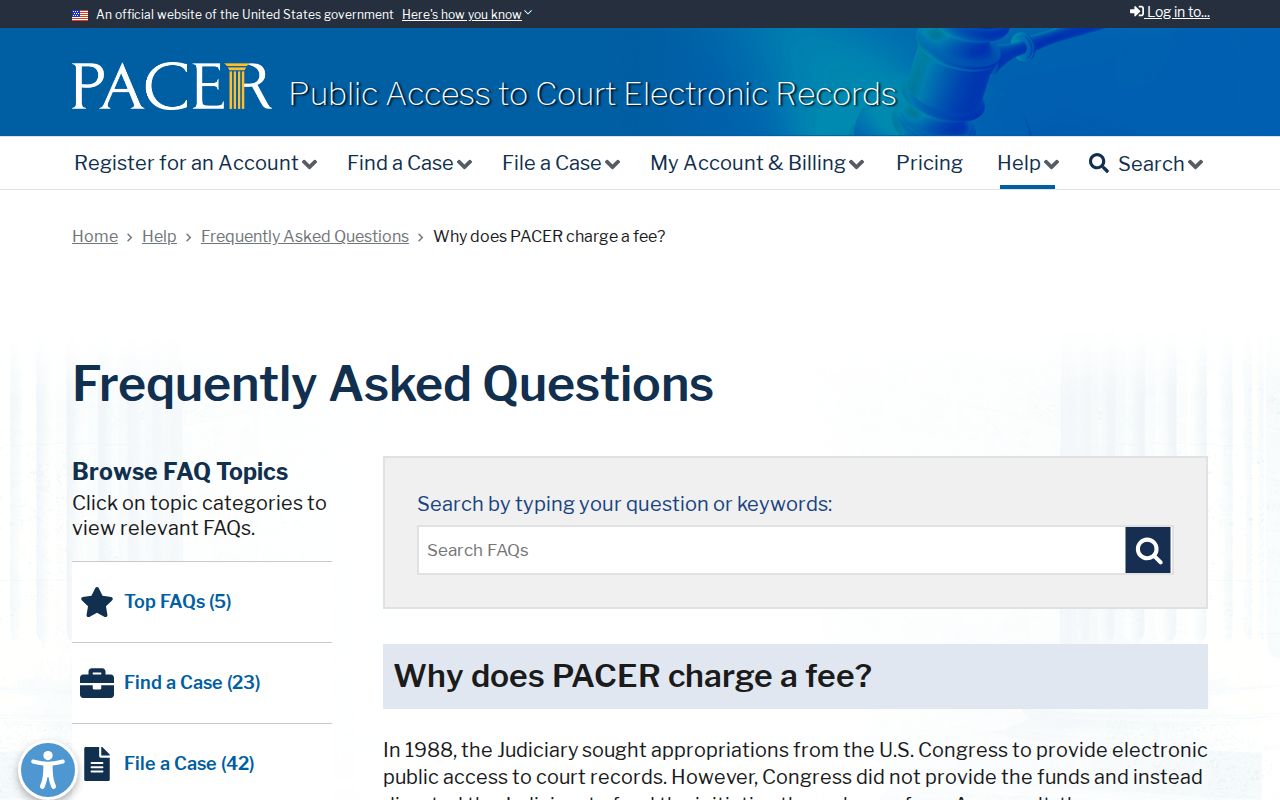
The divide matters when a case caption names the United States rather than a Texas county court. That single line sends you to a different system. The Tyler courthouse is the local access point for federal filings. View the Eastern District of Texas Tyler location page for courthouse information, not for any case or warrant.
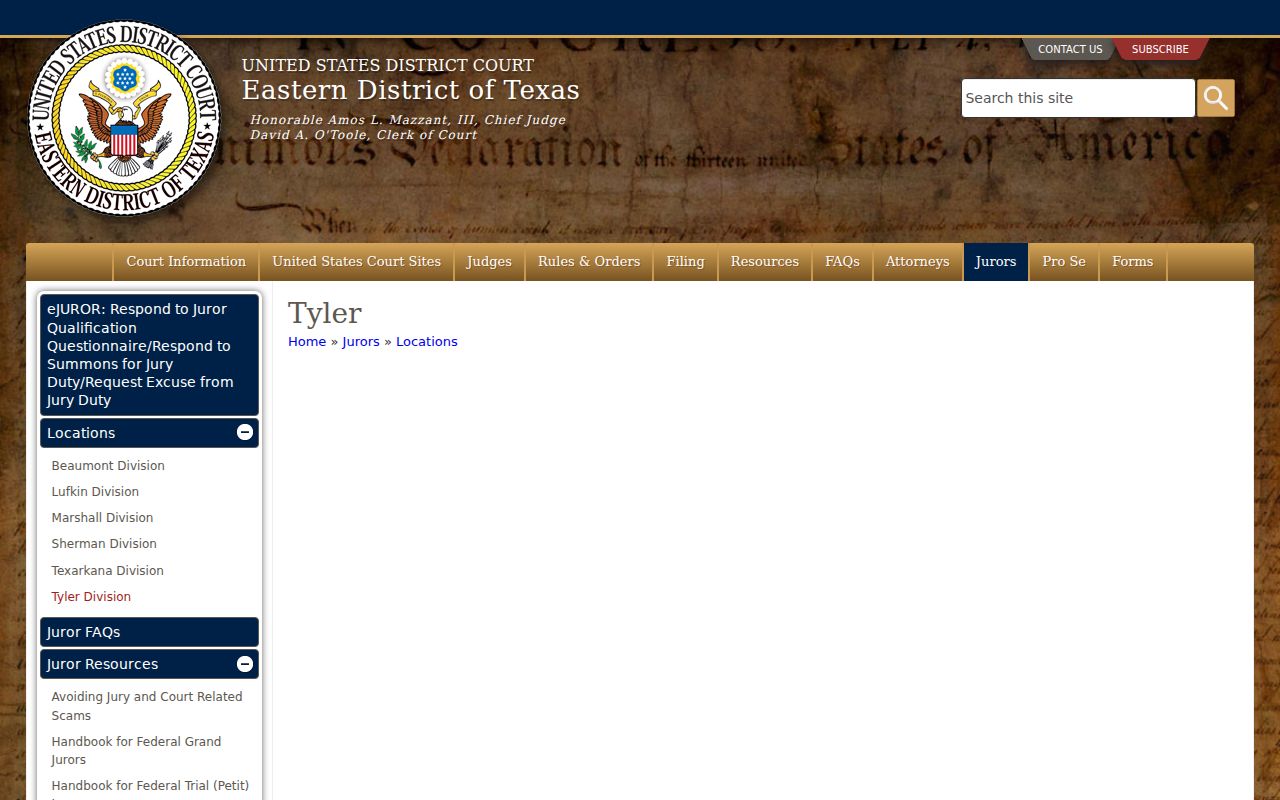
Use the location page for courthouse access details and PACER for federal docket access.
Smith County Search Warrants Differ From Arrest Warrants
Search warrants and arrest warrants do different jobs in Smith County. An arrest warrant directs that a person be taken into custody. A search warrant lets peace officers examine a described person, place, or property. Texas Code of Criminal Procedure Chapter 18 governs the second kind. It says nothing about public active-arrest lists, and what becomes available before or after execution rests with the issuing court and the law that applies. Read the official Chapter 18 text; that link opens the statute itself, not a Smith County case file.
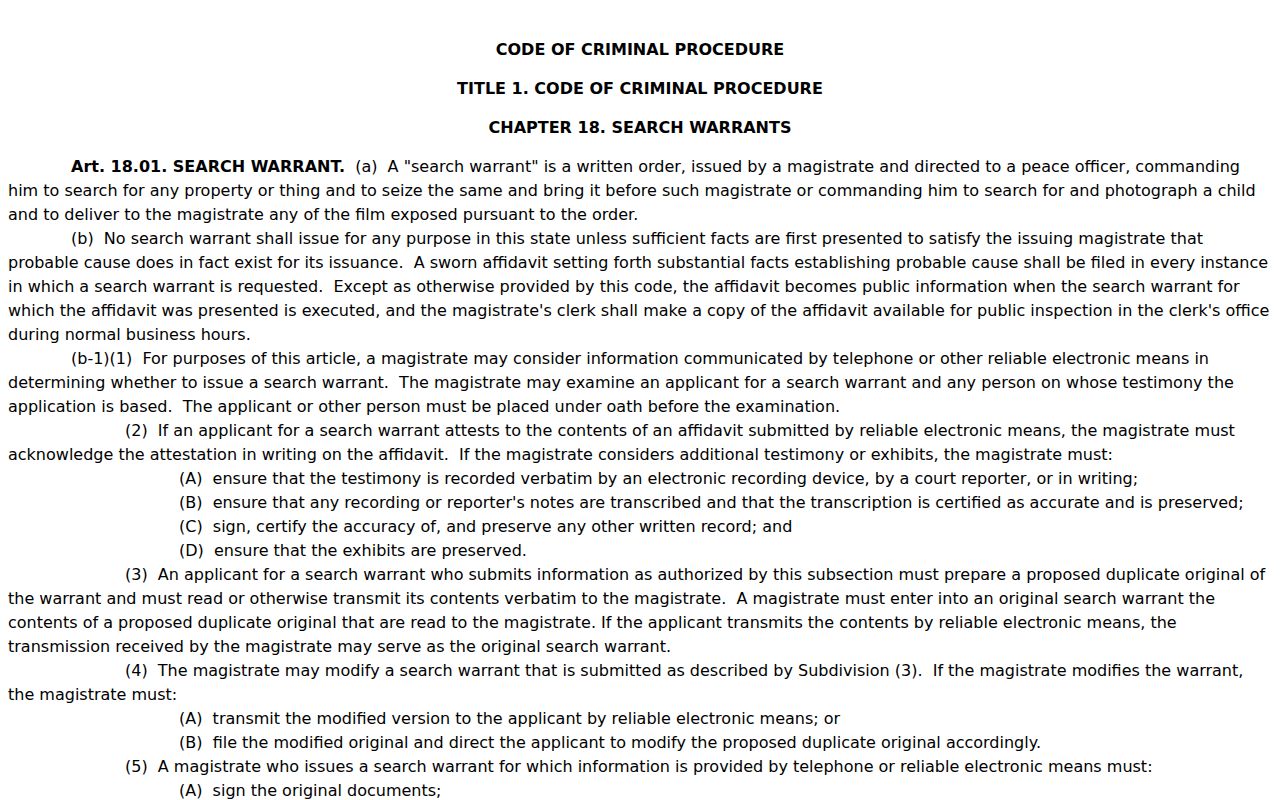
For a Smith County arrest matter, stay with the charging court and its clerk. A search-warrant record is not proof of an arrest warrant.
Handling an Arrest Warrant in Your Name
A Texas attorney can confirm the issuing court, check current warrant status, review bond terms, and advise whether a motion or a voluntary appearance fits your case in Smith County. The District Clerk or County Clerk can pull the case record. Neither can promise a judicial outcome. Smith County sets no universal surrender window or bond schedule. City-level warrant? Call that city's municipal court. Federal cases go through the federal court route.
Important: Confirm the order with the issuing court and plan any appearance, bond, or surrender with counsel before going to an office.